The Sombrero Galaxy (Messier 104 / M104) is one of the most iconic deep-sky objects in the universe.
Known for its bright core and dramatic dust lane, it sits in the Virgo constellation about
~29–31 million light-years away. This article presents fact-checked, NASA/ESA-supported information
with clear explanations written for space enthusiasts like me—someone who follows astronomy out of pure curiosity,
not professional equipment or telescopes.
Introduction: Why the Sombrero Galaxy Fascinates Me
I first came across the Sombrero Galaxy while reading about famous Messier objects.
Even without a telescope, its structure stood out immediately in images—like a glowing cosmic disk
wrapped with a dark dust ring. What makes it special is not just its beauty, but the science hidden inside it.
Agencies like NASA and the
European Space Agency (ESA)
continue to study galaxies like M104 to understand how galaxies evolve over billions of years.
Top Verified Facts About Sombrero Galaxy (M104)
1. A Bright Galaxy Visible in Amateur Telescopes
M104 has an apparent magnitude of about +8, making it visible in small telescopes under dark skies.
Its brightness comes from a dense central bulge packed with billions of stars.
2. Its “Sombrero Shape” Comes From a Dust Lane
The galaxy’s famous appearance is caused by a large, symmetrical dust ring cutting across its disk.
This structure blocks light from the core and creates the iconic silhouette seen in astronomical images.
3. A Supermassive Black Hole at the Center
At its core lies a supermassive black hole (~1 billion solar masses).
Measurements of fast-moving stars near the center strongly support its existence.
NASA observations confirm that such black holes influence galaxy structure and evolution.
4. A Hybrid Galaxy Type
M104 shows characteristics of both spiral and elliptical galaxies.
It has a disk and dust lane like a spiral galaxy, but a large, dominant bulge similar to elliptical galaxies.
This makes it important for studying galaxy classification and evolution.
5. Thousands of Globular Clusters
The Sombrero Galaxy hosts an estimated 1,900–2,000 globular clusters,
far more than the Milky Way’s ~150–200 clusters.
This suggests a complex formation history involving early mergers.
6. Smaller Than the Milky Way but Very Dense
M104 is about 50,000 light-years wide, roughly half the size of the Milky Way,
but its central region is extremely dense and bright.
7. Active Galactic Nucleus Activity
Observations show weak X-ray and radio emissions from the nucleus,
indicating low-level active galactic nucleus (AGN) activity around its black hole.
8. Nearly Edge-On View From Earth
We see the Sombrero Galaxy almost perfectly edge-on, which is why its dust lane is so clearly visible.
This viewing angle helps astronomers study galactic structure in detail.
9. Extended Dark Matter Halo
Like most large galaxies, M104 is surrounded by a massive dark matter halo.
This invisible structure affects the motion of stars and the galaxy’s overall stability.
10. Likely Shaped by Ancient Mergers
Evidence from its structure and cluster population suggests past galaxy mergers played a key role in its formation.
However, its disk survived, making it a valuable case study for galaxy evolution models.
Simple Scientific Insight: Why It Matters
From a learning perspective, the Sombrero Galaxy is more than a beautiful image.
It helps astronomers test theories about how galaxies grow, merge, and host supermassive black holes.
According to ESA and NASA research programs, galaxies like M104 are “natural laboratories”
for studying cosmic evolution.
FAQs About the Sombrero Galaxy
Q. Is the Sombrero Galaxy bigger than the Milky Way?
No. The Milky Way is roughly twice its size (~100,000 light-years vs ~50,000 light-years for M104).
Q. How big is the black hole in M104?
It is estimated at about 1 billion solar masses, making it one of the more massive nearby galactic black holes.
Q. What is the largest known galaxy?
One of the largest known galaxies is IC 1101, a supergiant elliptical galaxy spanning millions of light-years.
Q. Will galaxies like Sombrero exist forever?
No. Over extremely long timescales, galaxies evolve, merge, and eventually star formation will cease as the universe ages.
Note: This article is based on verified astronomical data from trusted scientific sources, including NASA, ESA, and ESO. The content is simplified for general readability while maintaining scientific accuracy.
On November 15, 2026, Voyager 1 will achieve a jaw-dropping milestone: it will be exactly one light-day away from Earth.
Imagine this — a signal traveling at the speed of light will take a full 24 hours to reach it.
This isn’t just a number; it’s a monument to human curiosity, persistence, and the audacity to send a tiny spacecraft hurtling into the endless expanse of interstellar space.
A Journey That Began in 1977
Launched on September 5, 1977, Voyager 1 began as part of NASA’s bold Voyager program, designed to explore the outer planets during a rare celestial alignment.
Back then, computers were slower than today’s calculators, and the notion of traveling beyond the solar system seemed like science fiction.
Yet, this unassuming spacecraft has outlived every expectation, becoming humanity’s most distant messenger.
During its epic encounters with Jupiter and Saturn, Voyager 1 revealed wonders that no human had ever imagined:
molten volcanoes on Io, the ethereal beauty of Saturn’s rings, and countless moons and phenomena that reshaped our understanding of the outer solar system.
These discoveries weren’t just scientific; they were cosmic revelations, the first glimpses of worlds beyond our own.
Breaking Into Interstellar Space
In August 2012, Voyager 1 achieved something truly historic — it crossed the heliopause, leaving the Sun’s protective bubble and entering the uncharted territory of interstellar space.
For the first time in history, humanity had a probe beyond our solar system, sampling cosmic rays, magnetic fields, and plasma waves in a region no one had ever visited.
Even after more than four decades, Voyager 1 continues to beam data back to Earth.
Each faint signal carries decades of discoveries, a testament to brilliant engineering and the enduring human drive to explore.
What It Means to Reach One Light-Day
A light-day is the distance light travels in 24 hours — around 25.9 billion kilometers.
Reaching this milestone emphasizes the unimaginable scale of the universe and the staggering journey Voyager 1 has undertaken.
Once this point is reached, messages sent from Earth will take a full day to arrive, and any reply will take another day to return — a humbling reminder of how vast the cosmos truly is.
The Golden Record: Humanity’s Voice to the Stars
Voyager 1 carries with it one of humanity’s most poetic achievements: the Golden Record.
This gold-plated disc contains greetings, images, sounds, and music from Earth, curated under the direction of Carl Sagan.
It’s not just a scientific instrument; it’s a time capsule, a message of life, culture, and creativity meant for any intelligent being that might encounter it in the distant future.
Where Voyager 1 Is Headed Next
Although Voyager 1 has left the Sun’s immediate influence, it remains gravitationally bound to our star.
Over tens of thousands of years, it will slowly drift toward the outer reaches of the Oort Cloud, and eventually wander indefinitely through interstellar space.
Even when its instruments go silent, Voyager 1 will continue its eternal journey, a lone ambassador of Earth traveling through the galaxy.
NASA expects its power supply to support instruments into the early 2030s.
As energy dwindles, instruments will gradually shut down, but the spacecraft itself will keep moving — silently, endlessly, and with its story forever etched in the cosmos.
Voyager 1: A Legacy Beyond Time
Voyager 1’s approach to the one-light-day mark is more than a scientific milestone; it’s a symbol of humanity’s limitless curiosity and drive to explore.
No other spacecraft has traveled farther, seen more, or inspired generations like Voyager 1.
Its journey reminds us that the human spirit is capable of reaching farther than our eyes can see and farther than our minds can imagine.
On November 15, 2026, as Voyager 1 reaches this historic distance, we celebrate not just a spacecraft, but the enduring courage and vision of humankind — forever reaching for the stars.
Hey, if you're anything like me, November's chill in the air just screams for cozy nights under the stars. And this year, the Leonid meteor shower is serving up one of the sky's coolest free shows. It's that magical time when Earth zips through a trail of comet dust, turning the night into a fireworks display—minus the noise. Let's dive into everything you need to know to catch the action on November 16-17, 2025.
What Exactly Are the Leonid Meteors? A Quick Explainer
Picture this: Every year around now, our planet cruises through the dusty leftovers from Comet 55P/Tempel-Tuttle—like cosmic breadcrumbs scattered on its 33-year loop around the sun. Those tiny bits slam into Earth's atmosphere at blistering speeds, heating up and streaking across the sky like shooting stars. They seem to burst out from the constellation Leo (hence the name), but really, you might spot them anywhere overhead.
Normally, you're looking at 10-15 meteors per hour if conditions are right, but every few decades, things go wild with a full-on meteor storm. Sadly, 2025's a chill year—no storm expected—but even a handful of these zippy streaks feels pretty epic.
Why Leonid Meteors Stand Out: Speed, Fireballs & That Wow Factor
These aren't your average shooting stars. Leonids clock in at about 71 kilometers (44 miles) per second, making them some of the fastest out there—think rifle bullet on steroids. That speed means brighter flashes, often with colorful glows or lingering trails that hang in the air like smoke signals from space.
Blazing Fireballs: Bigger chunks create these explosive bursts of light that can outshine Venus—pure eye candy.
Earth-Grazers: Some skim the horizon, leaving super-long, glowing paths that twist and fade slowly.
Storm Potential: Tied to the comet's orbit, these happen roughly every 33 years when we hit a thick dust cloud. The last big ones lit up the sky in the early 2000s.
Science Perks: Spotting them helps astronomers piece together comet secrets and solar system history—citizen science at its finest.
It's not just pretty; it's a window into the wild mechanics of our cosmic neighborhood.
Leonid Meteor Shower 2025 Peak Dates: When to Look Up
The shower kicks off early November and trails into December, but the sweet spot for 2025 is the night of November 16 into the morning of the 17th. Keep an eye out on the 18th too, just in case. The radiant point—the "source" in Leo—pops up around midnight and climbs highest before dawn, so that's prime time.
Luckily, the moon's playing nice: It's a slim waning crescent (about 9% full), rising late and barely washing out the dark skies. No bright moonlight stealing the show—perfect for faint meteors.
Best Places and Easy Ways to Watch the 2025 Leonid Meteor Shower
You don't need a fancy setup to join the fun—just you, the sky, and maybe a thermos of hot cocoa. Here's my no-fuss plan to make it memorable:
Pick a Dark Hideaway: City glow kills the vibe, so drive out to a rural spot or state park. Apps like Dark Sky Finder can point you to low-light zones.
Settle In Comfy: Grab a lounge chair, blanket, or even your sleeping bag. Recline and scan the whole dome—no neck cramps required.
Let Your Eyes Adjust: Give it 20-30 minutes in the dark; that's when the magic sharpens into focus.
Scan Wide, Not Fixed: Sure, glance at Leo, but meteors streak everywhere. It's like waiting for fireworks—you never know where the next one pops.
Bundle Up Smart: Nights get nippy, so layers, gloves, and that warm drink are non-negotiable.
Chill and Chat: It's sporadic, so bring friends or a podcast. The wait makes each streak hit harder.
Bonus: No gear? No problem. Your eyes are the best telescope here.
What Makes Some Leonid Shows Epic? Key Factors for 2025
Not every year's a banger, but 2025's got solid potential. Here's what tips the scales:
Comet Timing: That 33-year orbit means we sometimes plow through fresh, dense debris for fireworks-level action.
Dust Clump Size: Older trails spread thin, so rates drop; fresh ones pack a punch.
Moon Check: This year's dim crescent is a win—fewer washed-out views.
Weather Luck: Clear, dry skies let those trails shine; clouds are the ultimate buzzkill.
Overall, expect a relaxed vibe with room for surprises.
Iconic Leonid Meteor Storms: A Look Back at Sky-High History
The Leonids have been dropping jaws since forever. Some highlights that still give me chills:
1833: One of the first recorded storms—up to 100,000 meteors an hour, inspiring songs like "Stars Fell on Alabama."
1966: Peak insanity with thousands raining down in minutes; observers called it like "celestial rain."
1999-2002: A string of outbursts, peaking at 1,500+ per hour in spots—modern skywatchers' dream era.
These events didn't just wow crowds; they sparked meteor science, proving comets leave these dusty legacies.
Capturing Leonid Meteors: Simple Photography Tips for Beginners
Want proof for your Instagram? Snapping meteors is easier than it sounds, even with your phone:
Go Wide-Angle: Lenses that capture big sky chunks mean more chances to nail a streak.
Tripod Is Key: Steady that camera—no shaky hands ruining the shot.
Long Exposures: Try 10-30 seconds to trace those glowing paths.
ISO Sweet Spot: Around 800-1600 keeps things bright without grainy noise.
Remote Trigger: Or use your phone's timer to avoid jolts.
Pro tip: Time-lapses on a smartphone app can bag multiples without babysitting. Just set it and sip your cocoa.
Why Bother with the 2025 Leonids? It's Worth the Late Night
Even without a storm, this shower's got that intimate spark. Here's why I'm marking my calendar:
Minimal Moon Drama: Dark skies mean every faint meteor gets its moment.
Speed Thrills: Those quick, trailing zips are addictive—each one a tiny space story.
Zero Barrier to Entry: Just show up; no tickets, no telescopes.
Join the Science: Log your sightings on apps like the International Meteor Organization—help map the cosmos from your backyard.
It's a low-key reminder that the universe is throwing confetti our way, gratis.
Wrapping Up: Make the 2025 Leonids Your Next Adventure
At its core, the Leonid shower isn't about tallying streaks—it's that quiet awe when the sky feels alive. Whether it's a single fireball stealing your breath or a steady drip of wonders, it's a nudge to look up more often.
So, circle November 16-17 on your calendar. Scout a dark patch, wrap up warm, and let the stars do the talking. Who knows? Your perfect meteor memory might be waiting. Clear skies and happy hunting!
Official Explanation: Project Mogul (classified Cold War balloon program)
Key Personnel: Mac Brazel (rancher), Major Jesse Marcel (RAAF intelligence officer)
Official Reviews: GAO Report (1994), U.S. Air Force Report (1997: *The Roswell Report: Case Closed*)
Every time I revisit the Roswell UFO incident of 1947, I feel the same mix of curiosity and uncertainty.
It’s one of those stories that refuses to settle into a single explanation. I first read about it years ago in a book on UFO history,
expecting a simple alien crash story. Instead, I found military reports, conflicting witness accounts, Cold War secrecy, and decades of speculation layered on top of each other.
Even today, the central question remains unresolved in public imagination:
Did an alien spacecraft crash near Roswell, New Mexico—or was it a misunderstood military balloon project amplified by fear and rumor?
This article walks through the full story in detail—fact, testimony, official reports, and scientific context—so you can evaluate the evidence clearly.
The Night the Roswell UFO Mystery Began
Front-page reporting from 1947 when Roswell was first described as a “flying disc” incident.
The story begins in July 1947 in the quiet desert of New Mexico, near the town of Roswell.
A rancher named William “Mac” Brazel discovered unusual debris scattered across his land after a severe thunderstorm.
What he found did not resemble ordinary wreckage.
The material reportedly included metallic foil, rubber strips, and lightweight wooden-like beams.
Brazel initially ignored it, but later decided to report it to local authorities when curiosity turned into concern.
That decision set off one of the most famous military investigations in UFO history.
The Roswell Army Air Field quickly became involved, and within days, the situation escalated far beyond a local ranch report.
On July 8, 1947, a press release stated that the military had recovered a “flying disc.”
Newspapers across the United States ran explosive headlines, and for a brief moment, global attention turned toward Roswell.
But just as quickly, the story changed direction.
The Sudden Retraction That Changed Everything
Within 24 hours, the U.S. military retracted its statement.
Officials now claimed the debris came from a weather balloon rather than a crashed spacecraft.
Photographs were released showing military personnel holding fragments of rubber, foil, and sticks.
To the public, this looked like a simple explanation. But for many researchers, the speed of the reversal raised suspicion.
Why was it first called a “flying disc”?
Why was the explanation changed so quickly?
These questions became the foundation of the modern Roswell UFO conspiracy theory.
Eyewitness Accounts: The Human Side of the Roswell UFO Incident
Mac Brazel’s Original Discovery
Brazel described the debris as strange and unlike anything he had seen before.
He noted that it was light, unusually strong, and behaved differently from normal materials.
Later official interviews softened his statements, creating debate about whether his account was influenced by military pressure or clarification.
Major Jesse Marcel’s Testimony
One of the most important figures in the Roswell case is Major Jesse Marcel, the intelligence officer who examined the debris.
Years later, Marcel stated that the material was not ordinary and may not have been of human origin.
He described unusual markings and structures that did not match known materials of the time.
His son later supported his account, adding that he had seen fragments as a child.
However, these recollections emerged decades after the event, which introduces the possibility of memory distortion.
Claims of Alien Bodies
In the 1970s and 1980s, new accounts emerged describing alleged alien bodies recovered from the crash site.
Witnesses claimed the beings were small, grey, and humanoid in shape.
However, these claims lack contemporaneous documentation from 1947.
No medical reports, photographs, or official records support these descriptions.
This significantly weakens their reliability from an EEAT perspective.
The Official Explanation: Project Mogul
In the 1990s, the U.S. Air Force released a detailed explanation stating that the Roswell debris likely came from Project Mogul.
This was a classified military program designed to detect Soviet nuclear explosions using high-altitude balloon arrays.
The materials used in these experiments—thin metallic foil reflectors, rubber components, and lightweight wooden structures—closely match descriptions of the debris found by Mac Brazel.
Later reports also addressed claims of “alien bodies,” suggesting they may have been confused with military crash-test dummies used in later experiments.
From a historical standpoint, this explanation aligns with known Cold War secrecy practices and documented military technology.
Why the Roswell UFO Mystery Persists
Even with a strong official explanation, the Roswell incident continues to attract debate.
This persistence is not unusual in historical mysteries involving secrecy, incomplete records, and conflicting testimony.
The timing of the event also played a major role.
1947 was the beginning of the modern “flying saucer” era following widespread UFO sightings in the United States.
Public imagination was already primed for extraterrestrial explanations.
Over time, Roswell became more than an incident—it became a symbol of government secrecy and unexplained aerial phenomena.
The Alien Hypothesis and Popular Culture
The alien crash theory gained momentum through books, documentaries, and entertainment media.
From the 1970s onward, UFO researchers argued that Roswell involved recovered extraterrestrial technology.
Hollywood further amplified the idea, embedding Roswell into global pop culture.
Films, television series, and documentaries turned it into the defining symbol of UFO conspiracy theories.
However, despite decades of interest, no verified physical evidence of extraterrestrial origin has ever been produced.
Scientific Perspective: Could Alien Travel Reach Earth?
From a scientific perspective, interstellar travel presents extreme challenges.
The distances between stars are vast, requiring energy levels and propulsion systems beyond current human capabilities.
The Fermi Paradox raises an important question:
if intelligent life is common, why have we not detected clear evidence of it?
While this does not rule out extraterrestrial life, it does make the specific claim of a 1947 crash landing significantly less likely based on current scientific understanding.
The Drake Equation can be expressed as:
$$ N = R^* \cdot f_p \cdot n_e \cdot f_l \cdot f_i \cdot f_c \cdot L $$
This equation estimates the number of communicative civilizations in our galaxy, but it does not confirm contact or visitation.
Today, Roswell is deeply embedded in global UFO culture.
The town hosts museums, festivals, and exhibitions centered around the 1947 incident.
What was once a remote desert mystery has become a worldwide cultural phenomenon.
It represents curiosity, skepticism, and the human desire to understand the unknown.
Frequently Asked Questions (FAQ)
Q1. Was there any real proof of aliens at Roswell?
No verified physical evidence, biological remains, or authenticated government documentation has ever confirmed extraterrestrial life at Roswell.
Over the decades, multiple eyewitness claims have circulated, but none have been supported by forensic analysis or independently verified artifacts.
Both the 1994 GAO review and the 1997 U.S. Air Force report found no evidence supporting alien involvement and pointed toward terrestrial explanations, most likely classified military balloon programs.
Q2. What did the 1997 U.S. Air Force report conclude about Roswell?
The 1997 report, The Roswell Report: Case Closed, concluded that the debris was most likely connected to Project Mogul.
Project Mogul was a secret balloon program designed to detect Soviet nuclear tests during the early Cold War period.
The report also addressed claims of “alien bodies,” suggesting they may have resulted from misinterpretations of later military crash-test dummy programs or confused recollections over time.
Q3. What did the 1994 GAO investigation reveal?
The U.S. Government Accountability Office (GAO) reviewed federal records related to the 1947 incident in Roswell.
The investigation found that many records were missing, destroyed, or improperly archived, largely due to record retention practices and Cold War-era classification systems.
However, the GAO report did not find any evidence supporting extraterrestrial explanations.
Instead, it highlighted gaps in documentation that continue to fuel public debate and uncertainty.
Q4. Why does the Roswell UFO incident remain controversial today?
Roswell remains controversial because it sits at the intersection of incomplete records, conflicting eyewitness testimony, and decades of cultural interpretation.
The initial military statement describing a “flying disc,” followed by a rapid retraction, created long-lasting public skepticism.
Over time, the incident became deeply embedded in UFO culture and media, further amplifying alternative interpretations.
Today, it is often discussed in the broader context of unidentified aerial phenomena (UAPs) and Cold War secrecy.
Q5. What was Project Mogul and why is it important to Roswell?
Project Mogul was a classified U.S. military program that used high-altitude balloon arrays to detect sound waves from possible Soviet nuclear tests.
The materials used in these experiments included foil, rubber, and lightweight structural components.
These closely match descriptions of the debris recovered by rancher William “Mac” Brazel in 1947.
Because the program was classified, early public explanations were limited, which contributed to confusion and later speculation.
Q6. How reliable are eyewitness accounts from Roswell?
Eyewitness accounts from Roswell are historically important but are generally classified as anecdotal evidence rather than scientific proof.
Many detailed claims surfaced decades after the incident, which introduces the possibility of memory distortion or influence from later UFO narratives.
While these testimonies contribute to the cultural and historical significance of Roswell, they are not considered conclusive evidence in official investigations.
Conclusion: What Do We Really Know About Roswell?
After reviewing military reports, eyewitness testimony, scientific analysis, and historical context,
the most supported explanation is that the Roswell debris originated from a classified military balloon project—most likely Project Mogul.
However, the combination of secrecy, changing statements, and human memory has kept the story alive far beyond its original context.
Whether viewed as a scientific case study or a cultural legend, the Roswell UFO incident of 1947 remains one of the most enduring mysteries in modern history.
And perhaps that is why it still matters—not because we have definitive proof of aliens, but because we still find ourselves asking the question.
Imagine holding a fragment of Mars in your hands—material that once sat in an ancient deltaic system billions of years ago, potentially preserving organic chemistry from a habitable past. I still remember the first time I read about the Mars Sample Return mission (MSR) under NASA’s Mars Exploration Program and ESA collaboration framework. It didn’t feel like distant science fiction anymore—it felt like a mission architecture humanity was actively building step by step.
Unlike orbital spectroscopy or rover-based in-situ analysis, MSR represents the first coordinated attempt by NASA and the European Space Agency (ESA) to execute a multi-stage interplanetary sample retrieval chain. According to NASA’s Mars Sample Return overview and ESA mission architecture documents, the goal is to return cached Martian material for high-resolution laboratory analysis on Earth.
However, as of April 2026, the mission is undergoing a significant redesign following budget constraints, technical complexity assessments, and an internal cost cap reported near $11 billion in NASA program evaluations. The architecture is no longer static—it is evolving.
[NASA MSR Program]
This makes MSR not just a planetary science mission, but a live case study in deep-space engineering, international cooperation, and mission re-architecture under financial and technical pressure.
Mars Sample Return Mission Explained: 2026 Architecture Reset and NASA–ESA Strategy Shift
The Mars Sample Return mission is not a single spacecraft—it is a multi-element system-of-systems designed to retrieve cached igneous and sedimentary cores from Jezero Crater and return them to Earth under strict planetary protection protocols.
Jezero Crater was selected based on NASA’s Decadal Survey priorities due to its preserved ancient deltaic deposits, which maximize the probability of organic matter preservation and biosignature retention.
[ESA MSR Overview]
While MSR has historically been described as a rover–lander–orbiter chain, the 2026 program reset has introduced new uncertainty in architecture definition.
NASA is currently evaluating redesigned return pathways and has issued commercial partnership solicitations for rapid retrieval solutions involving industry players such as SpaceX and Blue Origin (concept-stage evaluation).
Step 1: Perseverance Rover and Sample Caching (Jezero Crater)
Perseverance is actively caching sealed Martian core samples for future retrieval.
NASA’s Perseverance rover, operating since 2021, is currently caching scientifically selected rock cores in titanium tubes. These include igneous, sedimentary, and atmospheric samples designed for high-fidelity laboratory analysis.
One of the most significant recent samples is the “Cheyava Falls” core, which showed mineralogical patterns consistent with potential biosignature-forming processes, though not confirmed as biological in origin.
[NASA Science: Perseverance]
Perseverance has effectively created a curated planetary archive that will later be retrieved under evolving MSR architecture.
Public fascination with Martian surface interpretation often extends beyond formal science. For example, speculative discussions about geological anomalies such as
unusual square formations on Mars
highlight how image interpretation can diverge from geophysical explanations such as erosion, pareidolia, and imaging resolution artifacts.
Step 2: Sample Retrieval System (Under 2026 Redesign Review)
The original Sample Retrieval Lander (SRL) and Mars Ascent Vehicle (MAV) architecture proposed in earlier NASA–ESA designs is currently under formal reassessment as of 2026.
The redesign was triggered by escalating cost estimates (~$11B program envelope), engineering risk reassessments, and schedule compression concerns identified in NASA internal reviews.
The revised strategy is exploring modular retrieval systems, including potential commercial launch and surface operations contributions under NASA’s “Rapid Response Architecture” framework (conceptual stage).
Step 3: Mars Ascent Vehicle (MAV) — First Rocket Launch From Another Planet (Revised Concept)
The Mars Ascent Vehicle concept remains central but is under redesign in 2026 architecture studies.
The Mars Ascent Vehicle (MAV) remains one of the most ambitious engineering concepts in planetary exploration: a controlled launch system from Mars’ surface to orbit.
However, NASA’s 2026 redesign review has not finalized propulsion architecture, reflecting ongoing trade studies between solid propulsion, hybrid systems, and commercial-assisted launch concepts.
Step 4: Earth Return Orbiter (ERO) and Orbital Capture
The ESA Earth Return Orbiter (ERO) remains the most stable component of the mission architecture and is still under active development according to ESA mission roadmaps.
Its role involves autonomous rendezvous and capture of the Mars sample container in orbit before initiating trans-Earth injection.
This phase is governed by strict planetary protection protocols under Category V Restricted Earth Return guidelines, requiring biological containment and contamination prevention both for Mars and Earth environments.
Step 5: Earth Entry, Recovery, and Planetary Quarantine
The Earth Entry Vehicle (EEV) is expected to deliver samples to a controlled landing site in the United States (likely Utah test range).
Once recovered, materials will be transferred into biosecure containment laboratories designed for Category V analysis under NASA Planetary Protection Office oversight.
These protocols treat Martian material as potentially biohazardous until fully characterized.
MSR Timeline: The 2026 Redesign and Future Horizons
The Mars Sample Return timeline has been repeatedly revised due to cost growth, technical risk reassessment, and international coordination complexity.
As of 2026, NASA has paused full architecture execution pending redesign approval, shifting toward a more flexible, potentially commercial-assisted framework.
Component
Status (2026)
Perseverance Rover
Active sample caching (Jezero Crater)
Sample Retrieval Lander (SRL)
Under redesign review
Mars Ascent Vehicle (MAV)
Conceptual / architecture reassessment
Earth Return Orbiter (ERO)
In development (ESA-led)
Overall MSR Program
Paused for cost/architecture reset (2026)
What Will Mars Sample Return Reveal About Life, Habitability, and Planetary Evolution?
Once returned, Mars samples will be analyzed using high-resolution spectroscopy, isotope mapping, and nano-scale imaging far beyond rover capability.
The primary scientific objective remains the detection of potential biosignatures in ancient lakebed environments like Jezero Crater.
The New Space Race: MSR vs China’s Tianwen-3 Mission
Mars Sample Return is no longer an isolated effort. China’s planned Tianwen-3 mission aims to return Martian samples around 2031, creating parallel international timelines for planetary sample return science.
This introduces a renewed “sample return race,” increasing strategic urgency in planetary science and technological development.
Conclusion: Why Mars Sample Return Defines the Next Era of Space Exploration
The Mars Sample Return mission is evolving from a fixed architecture into a dynamic, adaptive international program shaped by budget realities, commercial involvement, and global competition.
Whether executed via NASA–ESA traditional systems or hybrid commercial frameworks, the scientific payoff remains unchanged: direct access to Martian geological history.
In many ways, MSR is no longer just about Mars—it is about how humanity builds, funds, and executes interplanetary science in the 21st century.
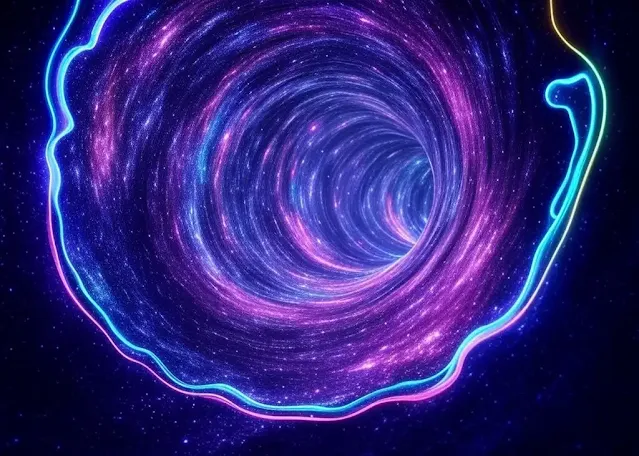
The universe never ceases to amaze me—it’s this enormous, mysterious place that keeps throwing curveballs at us. Lately, I’ve been buzzing about a discovery that’s got scientists and space nerds like me all worked up: interstellar tunnels right here in our solar system. These aren’t your sci-fi wormholes (though I wish!), but something real and unexpected that’s making us rethink space travel, magnetic fields, and the wild nature of the cosmos. Let’s unpack this mind-blowing find together.
What Are Interstellar Tunnels?
First off, let’s clear up what we’re talking about. In science fiction, wormholes are these cool shortcuts through spacetime, zapping you from one side of the galaxy to the other faster than you can say “light-year.” They come from Einstein’s general relativity, where he and Nathan Rosen cooked up the idea in the 1930s that massive objects—like black holes—could bend spacetime enough to connect far-off spots. Pretty neat, right? But here’s the thing: those are still just theories, and what we’re dealing with now isn’t quite that.
Instead, these “interstellar tunnels” are more like natural pathways in space, shaped by magnetic fields and cosmic forces. They’re not about bending spacetime for instant travel but rather channels in the interstellar medium—the gas, dust, and plasma filling the gaps between stars. Think of them as cosmic corridors, maybe linking different parts of space in ways we’re only starting to grasp.
The Big Find in Our Solar System
Here’s where it gets exciting. In late 2024, astronomers using the eROSITA X-ray telescope stumbled onto something wild in the Local Hot Bubble (LHB)—the big, hot gas cloud our solar system sits in. The LHB’s been around in science talk for ages, formed by supernovas that blasted out a cavity about 14 million years ago. But this new twist? They found a low-density channel—a “tunnel”—stretching out toward the Centaurus constellation.
I double-checked this, and it’s legit—published in Astronomy & Astrophysics by folks at the Max Planck Institute. They used eROSITA to map X-ray emissions from the LHB, revealing this tunnel-like feature cutting through the cooler gas outside. It’s not a wormhole, but a real structure, likely carved by ancient supernova shockwaves or stellar winds. The idea that it might connect us to other star systems is speculative, but it’s got me daydreaming about what’s out there.
How Do These Tunnels Work?
So, how does this even happen? Picture the LHB as a giant bubble of hot, thin gas—about a million degrees—blown out by exploding stars long ago. The tunnel’s a spot where that gas is even less dense, like a path cleared through the clutter. Scientists think it formed when supernova blasts or winds from young stars shoved the denser stuff aside, leaving this corridor behind.
What’s really cool is how it ties into magnetic fields. The Sun’s magnetic bubble, the heliosphere, wraps around our solar system, shielding us from cosmic rays—those zippy particles from deep space. Data from NASA’s Voyager probes (yep, those old-timers still kicking since 1977) show the heliosphere interacts with the interstellar medium in weird ways. This tunnel might be part of that dance, channeling particles or even linking up with other bubbles in the galaxy. It’s not a shortcut for spaceships, but it’s a natural feature that’s got us rethinking space’s layout.
What This Could Mean for Space Travel
Okay, I’ll admit—I got a bit carried away imagining zipping through this tunnel to visit Alpha Centauri. Sadly, that’s not on the table yet. This isn’t a wormhole we can hop into; it’s more like a cosmic highway for particles, not ships. But it’s still a big deal. If these tunnels connect different regions, they could affect how cosmic rays move, which matters for future space missions. Those rays are a real headache for astronauts outside Earth’s magnetic shield, so understanding these pathways could help us plan safer trips—like to Mars or beyond.
Down the road, if we figure out more about these tunnels, they might hint at bigger networks in the galaxy. Could they guide us to other stars someday? Maybe not directly, but they’re a clue to how space is stitched together, and that’s a start.
The Tricky Bits
Now, I’m no scientist, so I dug into this to make sure it holds up. The eROSITA data’s solid, but some folks are skeptical about calling it a “tunnel” outright—could just be a weird gas cavity, not a connector to anywhere special. Plus, even if it’s real, it’s not like we can use it anytime soon. These things might shift or collapse over time, and they’re way too vast and wild for us to poke at with current tech.
There’s also the “what if” factor. If these tunnels mess with cosmic rays or magnetic fields in unexpected ways, could that affect us here on Earth? Probably not directly, but it’s a reminder of how little we still know about our cosmic neighborhood.
Where We’re Headed
This discovery’s just the beginning. NASA’s got missions like the Interstellar Mapping and Acceleration Probe (IMAP), set to launch in 2025, that’ll dig deeper into the heliosphere and beyond. I’m betting we’ll hear more about these tunnels soon—maybe even find others. It’s not about hopping to another star tomorrow, but piecing together the galaxy’s hidden structure, one clue at a time.
Wrapping It Up
The interstellar tunnel in the Local Hot Bubble is one of those finds that makes you sit back and go, “Wow, space is wild.” It’s not a sci-fi portal, but a real, natural feature that’s got us asking big questions about our place in the universe. Whether it’s channeling cosmic rays or hinting at a galactic web, it’s a reminder of how much is still out there to explore. I can’t wait to see what’s next—because if this is what we’re finding now, the cosmos has plenty more surprises up its sleeve.
FAQ on Interstellar Tunnels
Q. What is a wormhole and what does it do?
A wormhole’s a theoretical tunnel through spacetime, dreamed up by Einstein and Rosen. It’s like a cosmic shortcut, linking distant spots in the universe. Unlike the tunnels in my article, wormholes bend spacetime itself, potentially letting you zip across galaxies—if they exist and we could use them.
Q. What happens if I enter a wormhole?
If you entered a wormhole—purely hypothetical—you might pop out light-years away, instantly crossing space. But it’s dicey: you could get crushed by gravity, fried by radiation, or lost forever if it collapses. The tunnels I wrote about just channel particles, not people.
Q. Has a wormhole ever been observed?
Nope, wormholes haven’t been spotted. They’re still just math and imagination, not reality. My article’s interstellar tunnels, like the one in the Local Hot Bubble, are real gas channels we’ve seen with eROSITA—not spacetime warps, but still super cool!
Q. Where do black holes take you?
Black holes don’t “take” you anywhere fun—they’re gravity traps. Fall in, and you’re squashed into a tiny point, no exit. Some theories suggest they link to wormholes, but that’s unproven. The tunnels I mentioned are different, just cosmic pathways, not black hole doors.
Q. Is time travel real?
Time travel’s real in theory—Einstein says moving near light speed slows time. Wormholes might let you jump backward, but we’ve never built or found one. My article’s tunnels don’t mess with time; they’re just space highways for particles, not time machines.
Q. What is the closest black hole to Earth?
The closest known black hole is Gaia BH1, about 1,560 light-years away in Ophiuchus. It’s a quiet one, not tied to the tunnels in my article. Those are gas channels in the Local Hot Bubble, not black hole territory—totally different beasts!
The Moon has always captivated me—its stark beauty hanging in the night sky, a quiet witness to human history. For years, we thought it was a dry, dusty wasteland, but recent discoveries have flipped that idea upside down. Water exists up there, locked in ice or bound to minerals, and NASA’s Lunar Trailblazer mission is about to uncover its secrets. Set to launch on February 26, 2025—though space schedules can be as fluid as the water it seeks—this small but mighty satellite will map lunar water with incredible detail. So, how will it do it? Let’s explore the science, the tech, and the exciting possibilities this mission opens up for our future in space.
Lunar Trailblazer is part of NASA’s Small Innovative Missions for Planetary Exploration (SIMPLEx) program, proving that big breakthroughs don’t need massive budgets. This compact spacecraft—just 440 pounds (200 kilograms)—is a collaboration between the California Institute of Technology (Caltech), NASA’s Jet Propulsion Laboratory (JPL), Lockheed Martin, the University of Oxford, and the UK Space Agency. It’s a lean, focused mission with one clear goal: to find and map water on the Moon.
Whether it’s ice tucked away in dark craters, hydroxyl molecules clinging to rocks, or H₂O scattered across sunlit plains, Lunar Trailblazer will pinpoint where it is, how much there is, and what form it’s in. This isn’t just about satisfying curiosity—it’s about laying the groundwork for humans to live and work on the Moon, using water as a resource for hydration, fuel, or even breathable air.
Getting to the Moon
The journey begins today—February 26, 2025—assuming all goes as planned. Lunar Trailblazer will hitch a ride on a SpaceX Falcon 9 rocket from Cape Canaveral alongside Intuitive Machines’ IM-2 mission. (For the latest launch status, NASA’s official site is your best bet, as dates can shift.) After blasting off, it’ll take a scenic six-month route to the Moon, spiraling into a low orbit about 60 miles (100 kilometers) above the surface, guided by the gravitational pull of the Sun, Earth, and Moon.
This slow, looping path saves fuel, ideal for a small satellite with limited propulsion. Once in orbit, it’ll circle the Moon 12 times a day, scanning the surface at different points in the lunar day—about 28 Earth days long. This orbit lets it catch water signals under varying light and temperature conditions, building a fuller picture of what’s down there.
The Tools of the Trade
Lunar Trailblazer’s water-hunting power comes from two cutting-edge instruments working together. Here’s how they’ll tackle the job:
1. High-Resolution Volatiles and Minerals Moon Mapper (HVM³)
Built by JPL, the HVM³ is a shortwave infrared imaging spectrometer—a tool that reads sunlight bouncing off the Moon. Water in its various forms—ice, liquid H₂O, or hydroxyl—soaks up infrared light in distinct patterns, like a cosmic barcode. HVM³ picks up these patterns, identifying not just that water’s there, but what kind it is.
What sets it apart is its razor-sharp resolution—down to tens of meters per pixel. Earlier missions, like Chandrayaan-1, proved water exists, but couldn’t zoom in like this. HVM³ will spot ice in shadowy craters or water-rich minerals in volcanic zones, giving us a detailed treasure map of the lunar surface.
Developed by the University of Oxford with UK Space Agency support, the LTM measures the Moon’s temperature. This matters because temperature drives how water behaves. In sunlit areas, it can hit 260°F (127°C), while shadowed craters plummet to -387°F (-233°C). Those extremes affect whether water stays as ice, evaporates, or binds to rocks.
The LTM’s high-res temperature maps will pair with HVM³’s data, showing how heat shapes water’s distribution. It might even reveal “micro-cold traps”—tiny, icy nooks too small for past missions to notice. Together, these tools will crack the code of the Moon’s water cycle.
Why Lunar Water Is a Big Deal
So why care about water on the Moon? For one, it’s a scientific goldmine. Mapping it could reveal how it got there—maybe from ancient volcanoes, comet crashes, or solar wind. That’s a window into the Moon’s history and even Earth’s own watery origins. But it’s not just about the past—it’s about the future.
NASA’s Artemis program wants humans back on the Moon by the late 2020s, this time to stay. Water could be a lifeline: filter it for drinking, split it into hydrogen and oxygen for rocket fuel, or use it to make air. Finding accessible deposits—like polar ice—could turn the Moon into a pit stop for missions to Mars and beyond. It’s practical and pretty inspiring when you think about it.
The Water-Mapping Process
In orbit, Lunar Trailblazer will zero in on about 1,000 key spots—roughly 1-2% of the Moon’s surface. Think volcanic plains, polar ice zones, and those permanently shadowed regions (PSRs) that never see sunlight. Here’s the plan:
Scanning the Surface: HVM³ will sweep the Moon for water’s spectral clues, while LTM tracks temperature. Each pixel becomes a mini-data packet, loaded with info on water and minerals.
Timing Is Everything: The lunar day’s wild temperature swings might shuffle water around. By revisiting sites at different times, the mission will catch those shifts—showing if water moves or changes form.
Peering Into Shadows: PSRs at the poles are prime ice candidates. HVM³ can detect faint reflected light there, and LTM will confirm if it’s cold enough for ice to stick around.
Building the Maps: The data gets stitched into high-res maps, detailing water’s type, amount, and location. These will be the go-to guides for future missions, pointing landers and rovers to the good stuff.
Teamwork Makes the Dream Work
What I love about this mission is how it brings people together. Caltech’s Bethany Ehlmann leads the charge, with a team spanning engineers, scientists, and even students from Pasadena City College and Caltech. Those undergrads will help run the spacecraft and crunch data—talk about a cool gig. Lockheed Martin built the hardware, and the UK’s LTM contribution shows how lunar exploration is a global effort.
What’s Next for Lunar Water
As I write this on launch day—February 26, 2025—I’m buzzing with anticipation, though I know delays are always possible (check NASA.gov for the latest). Lunar Trailblazer isn’t just a science project; it’s a stepping stone. Its maps will fuel Artemis, guiding astronauts to water-rich sites. Down the line, it could spark new ways to harvest lunar resources, maybe even kickstarting a lunar economy.
Picture this: humans living on the Moon, sipping water from its soil or launching ships with ice-turned-fuel. That future starts with missions like this. By pinpointing water, Lunar Trailblazer will help us take the Moon from a distant dream to a real destination.
Wrapping Up
The NASA Lunar Trailblazer is a small satellite with a huge mission: to find water on the Moon and unlock its potential. With its smart tools, clever orbit, and talented team, it’s set to deliver answers that could shape space exploration for decades. I’m thrilled to see where this journey takes us—here’s to a wetter, wilder Moon!
Imagine a star so dense that a teaspoon of its material outweighs Mount Everest, rotating 716 times every second. That’s PSR J1748-2446ad, the fastest-spinning object we’ve ever observed in the universe. Its equator moves at 70,000 kilometers per second—nearly a quarter of the speed of light. How does something that extreme hold together? I just graduated with an astronomy degree, and neutron stars like this one have kept me fascinated since I first cracked open a textbook on stellar evolution. Let’s dive into what drives PSR J1748-2446ad’s rapid spin, from its explosive origins to the stellar companion that powers its pace.
What Is PSR J1748-2446? Meet the Fastest Neutron Star
In November 2004, a team of astronomers—including Jason Hessels from McGill University, Scott Ransom, Ingrid Stairs, and others—detected this remarkable object using the Green Bank Telescope. By January 2005, their analysis confirmed it: PSR J1748-2446ad holds the record as the fastest-rotating neutron star we know. It’s located 18,000 light-years away in Terzan 5, a dense globular cluster in Sagittarius. Neutron stars form when a massive star—between 8 and 30 times the Sun’s mass—runs out of fuel and collapses in a supernova. The core compresses into a sphere roughly 10 to 20 kilometers across, packing up to twice the Sun’s mass into a tiny space. For PSR J1748-2446ad, its radius is estimated at less than 16 kilometers—a solid guess based on typical neutron star models, though we don’t have a precise figure yet.
What makes it stand out is its rotation: 716 Hz, or 716 spins per second—42,960 revolutions per minute. A Formula 1 car engine peaks at 15,000 RPM, so this is on a completely different scale. If Earth matched that speed, a day would last just 0.0014 seconds. How does it sustain such a rate without falling apart? It’s a combination of its birth, its surroundings, and a key companion star.
How Neutron Stars Acquire Their Initial Rotational Velocity
It all starts with a principle I learned in my intro physics class: conservation of angular momentum. Picture a figure skater spinning slowly with arms extended, then speeding up as they pull them in. When a massive star dies, its core shrinks from about 12,000 kilometers—Earth’s diameter—to 20 kilometers in an instant. That concentrates its rotation, turning a leisurely spin of once every few days or weeks into hundreds of rotations per second. It’s a fascinating example of physics at play in the cosmos.
For PSR J1748-2446ad, this initial burst was just the beginning. Most neutron stars slow down over time, shedding energy through electromagnetic radiation or gravitational waves, much like a top losing momentum. But this one gained speed instead. It’s a millisecond pulsar—a rare type of neutron star that accelerates long after its formation—thanks to a companion star that keeps it spinning faster.
Binary Systems: The Mechanism Behind PSR J1748-2446’s Rapid Spin
PSR J1748-2446ad isn’t solitary—it orbits a companion star, likely a giant with a mass at least 0.14 times the Sun’s and a radius five to six times larger. They complete an orbit every 26 hours in a nearly circular path, and occasionally the companion blocks 40% of the neutron star’s light from Earth, causing a partial eclipse. This relationship is what fuels its rapid rotation.
The neutron star’s intense gravity draws material—mostly hydrogen and helium—from its companion. This matter doesn’t fall directly; it forms an accretion disk, spiraling inward with increasing speed. When it reaches the neutron star’s surface, it transfers angular momentum, boosting the rotation rate. Over millions of years, this process—known as recycling—transforms a decelerating neutron star into a millisecond pulsar. PSR J1748-2446ad is a clear case: its companion has provided enough material to push it to 716 spins per second, emitting radio pulses as its misaligned magnetic poles sweep past us, marking it as a pulsar.
Why Doesn’t PSR J1748-2446 Rotate Even Faster?
Why doesn’t it spin faster—or disintegrate entirely? Neutron stars are held together by gravity so strong it compresses atoms into a dense neutron core. But there’s a limit. If the rotation becomes too rapid, centrifugal force at the equator could overcome gravity, ejecting material. At 70,000 kilometers per second, PSR J1748-2446ad is already close to that threshold.
Theoretical estimates suggest a neutron star might sustain up to about 1,500 Hz before breaking apart, but that’s not a fixed number—it depends on the equation of state for neutron star matter, which is still under debate. Most millisecond pulsars we’ve observed peak below 730 Hz, with PSR J1748-2446ad and 4U 1820-30 both at 716 Hz. Something—perhaps gravitational wave emission or a balance between accretion and rotation—appears to keep it stable there, though the exact reasons are still being studied.
PSR J1748-2446: Insights into Extreme Physical Conditions
This neutron star offers more than just speed—it’s a window into the universe’s extremes. Its density, 50 trillion times that of lead, hints at an interior where neutrons might transition into quarks or other exotic forms of matter, areas we’re only beginning to understand. Its magnetic field, a trillion times stronger than the Sun’s, generates the radio pulses that first revealed it to us. Living in Terzan 5—a globular cluster where stellar interactions are common—likely contributed to forming the binary system that drives its spin.
Studying PSR J1748-2446ad lets us explore questions about neutron star interiors, the behavior of matter under extreme pressure, and the evolution of binary systems. Each pulse arrives with remarkable consistency, offering data points for unraveling these cosmic mysteries.
Why PSR J1748-2446 Is Significant to Astronomy
The path of PSR J1748-2446ad—from a supernova remnant to a millisecond pulsar sustained by accretion—demonstrates the universe’s capacity for extraordinary phenomena. At 716 spins per second, it reveals how compact objects can harness immense forces through stellar interactions and physical boundaries stretched to their limits.
As we continue to observe it, this neutron star may shed more light on its history or the mechanisms behind its rotation. For now, it’s a striking presence in Terzan 5—a small yet powerful example of cosmic dynamics. Whether you’re drawn to astronomy or simply curious about the universe, PSR J1748-2446ad stands as a compelling illustration of nature’s ability to push the boundaries of possibility.
The Artemis program represents NASA’s renewed effort to send humans to the moon, a feat not accomplished since Apollo 17 in 1972. This initiative aims to land the first woman and first person of color on the lunar surface, establish a sustainable human presence, and develop technologies for future Mars missions. Named after Artemis, the Greek moon goddess and twin of Apollo, the program targets the lunar South Pole, a region of significant scientific interest due to its water ice deposits and unique geology. Supported by international partners and private industry, Artemis combines advanced engineering with rigorous scientific objectives. This overview provides a comprehensive look at its goals, missions, technology, challenges, and significance, based on data available as of February 23, 2025.
What Is NASA’s Artemis Program?
Introduced in 2017 through a U.S. presidential directive, Artemis is NASA’s strategy to resume human lunar exploration by the late 2020s. Unlike the brief Apollo missions, Artemis emphasizes sustained operations, focusing on the lunar South Pole, approximately 250,000 miles from Earth. This region’s resources and conditions make it an ideal testing ground for Mars, which lies an average of 140 million miles away. NASA collaborates with nations including Canada, Japan, and European countries, as well as private firms like SpaceX and Boeing, to execute the program. Mission timelines, while subject to change due to technical and budgetary factors, reflect NASA’s current planning as outlined on their official NASA website.
Artemis Program Goals: Why Explore the Moon Again?
Artemis pursues several well-defined objectives:
Diverse Crew Representation: NASA intends to include the first woman and first person of color among lunar astronauts, expanding the demographic scope of space exploration.
Sustainable Lunar Presence: The program seeks to establish a long-term foothold through surface habitats and the Gateway orbital station, testing extended off-world living.
Scientific Research: The South Pole’s permanently shadowed craters contain water ice—solid deposits embedded in regolith or subsurface layers—potentially holding clues to the solar system’s history. NASA estimates 100,000 to 1 million tons of ice based on Lunar Reconnaissance Orbiter findings.
Mars Mission Preparation: The moon’s environment, with its radiation exposure, one-sixth Earth gravity, and temperature extremes, mirrors Mars conditions, allowing validation of critical systems.
These goals align with NASA’s broader mission to advance human spaceflight and scientific knowledge.
Artemis progresses through a series of missions, with dates reflecting NASA’s latest estimates as of early 2025 and subject to revision.
Artemis I Mission: Uncrewed Lunar Test Success
When: Launched November 16, 2022; returned December 11, 2022.
Details: This uncrewed flight tested the Space Launch System (SLS) rocket and Orion spacecraft over a 25-day journey, reaching 268,563 miles from Earth. The SLS generated 8.8 million pounds of thrust, surpassing Apollo’s Saturn V.
Outcome: The mission validated Orion’s deep-space performance, though the heat shield exhibited unexpected material loss, prompting ongoing analysis.
Artemis II Mission: Humans Orbit the Moon
When: Scheduled for no earlier than April 2026, delayed from September 2025 due to technical adjustments.
Details: A crew of four—three NASA astronauts and one Canadian—will orbit the moon in Orion, traveling over 500,000 miles round-trip in approximately 10 days. This will mark the farthest human journey since Apollo.
Purpose: Evaluates Orion’s life-support systems, including air recycling and thermal controls, in deep space. Rea about Orion Spacecraft.
Artemis III Mission: First Lunar Landing in Decades
When: Targeted for mid-2027, shifted from late 2026.
Details: Two astronauts will land on the South Pole using SpaceX’s Starship, spending about seven days conducting surface operations. Activities include sample collection and deployment of scientific instruments like seismometers.
Purpose: Provides direct access to lunar ice and geological data, informing resource extraction techniques.
Future Artemis Missions: Building a Lunar Future
Details: Artemis IV, planned for around 2028, will deliver Gateway modules and land additional crew. Subsequent missions will expand infrastructure, potentially including habitats and power systems.
Purpose: Enables prolonged surface stays and gathers data on lunar resource use and Mars-relevant technologies.
Each mission builds on prior successes, with flexibility for timeline adjustments as challenges emerge.
Artemis Program Technology: Rockets, Spacecraft, and More
Artemis relies on a suite of advanced systems, each subjected to extensive testing:
Space Launch System (SLS): NASA’s Moon Rocket
Specs: Stands 322 feet tall, produces 8.8 million pounds of thrust using four RS-25 engines and twin solid rocket boosters, fueled by liquid hydrogen and oxygen.
Role: Propels Orion into a lunar trajectory with precision and power.
Orion Spacecraft: Crew Vehicle for Lunar Travel
Specs: Weighs 10.5 tons, seats four, features an Avcoat ablative heat shield designed for 5,000°F reentry temperatures. Solar panels generate 11 kilowatts of power.
Role: Transports crew through deep space. After Artemis I, NASA noted the heat shield lost over 100 small fragments due to gas buildup within the Avcoat material. Current tests at Ames Research Center include thermal vacuum chambers and hypersonic wind tunnels to refine venting and material bonding, targeting completion by mid-2025.
Gateway Lunar Station: Orbiting Moon Base
Specs: A modular platform with a power and propulsion element (PPE) and habitation module, totaling about one-sixth the size of the International Space Station.
Role: Acts as a staging point for lunar landings and a laboratory for radiation and microgravity studies. Read about Gateway Lunar Station.
SpaceX Starship: Lunar Lander Innovation
Specs: Measures 164 feet, fully reusable, powered by methane and oxygen via Raptor engines, capable of lifting 150 tons to low Earth orbit spacex.com/starship.
Role: Transports astronauts from Gateway to the lunar surface and back, leveraging its reusable design.
These technologies form an integrated system for lunar exploration.
Artemis Program Team: Global Space Collaboration
Artemis involves a broad coalition:
NASA: Directs the program, overseeing engineering and scientific integration.
International Partners: Canada contributes robotics and an Artemis II astronaut; Japan and Europe supply Gateway components and expertise.
Private Industry: SpaceX develops Starship, Boeing constructs SLS, and numerous firms provide subsystems.
Artemis Accords: Over 30 nations have signed this agreement for cooperative lunar exploration nasa.gov/artemis-accords.
This collaboration enhances the program’s scope and capabilities.
Artemis Program Challenges: Overcoming Lunar Hurdles
Artemis encounters several obstacles:
Heat Shield Analysis: After Artemis I, Orion’s Avcoat shield exhibited cracking and pitting from gas expansion during reentry. NASA is conducting arc-jet tests at Johnson Space Center and adjusting reentry trajectories, with solutions expected by mid-2025.
Financial Costs: A 2021 audit estimated $93 billion through 2025, with each SLS launch at $4.1 billion oig.nasa.gov.
Schedule Delays: Supply chain disruptions, the COVID-19 pandemic, and technical issues, such as a 2022 valve malfunction, have postponed milestones.
NASA addresses these through rigorous testing and resource allocation.
Artemis Program Benefits: Science and Beyond
Artemis yields significant returns:
Water Ice Resources: South Pole craters may contain 100,000 to 1 million tons of ice, present as frost in regolith or solid deposits, requiring thermal or mechanical extraction lunar.gsfc.nasa.gov. This could support fuel production and life support.
Geological Insights: Lunar rocks, some over 4 billion years old, offer data on solar system origins nasa.gov/lunar-science.
Radiation Research: Gateway will measure cosmic ray exposure, refining shielding for Mars missions.
Economic and Educational Impact: Supports over 70,000 U.S. jobs and promotes STEM education.
These outcomes justify the program’s investment.
What’s Next for Artemis Program?
As of February 23, 2025, Artemis II crew training is ongoing, Orion heat shield refinements are advancing, and Starship test flights continue spacex.com/updates. Artemis III aims for a mid-2027 landing, potentially at Malapert Crater, informed by Lunar Reconnaissance Orbiter data. Gateway assembly is targeted for 2028. Timelines remain fluid, with updates available on NASA’s site.
Why Artemis Program Matters: A Lunar Legacy
Artemis advances human spaceflight through methodical exploration and scientific inquiry. It establishes infrastructure for lunar operations, validates technologies for Mars, and contributes to our understanding of the solar system. Progress is tracked as the program unfolds.
The Moon has been a constant presence in our night sky for centuries, inspiring curiosity and wonder about the cosmos. Among its many features, the Sea of Tranquility stands out as a region of significant scientific and historical importance. Known by its Latin name, Mare Tranquillitatis, this vast lunar plain isn’t a body of water but an expansive area of ancient volcanic rock. Its history spans billions of years, from its dramatic formation to its role in humanity’s first lunar landing. Let’s explore its key characteristics, origins, and current relevance in lunar exploration to understand why this region continues to fascinate us.
Unveiling the Sea of Tranquility: Essential Details
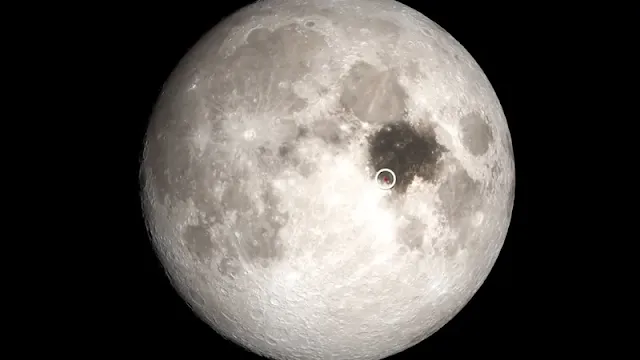
The Sea of Tranquility is one of the Moon’s prominent maria—dark, flat plains that form a substantial portion of its visible surface. Early astronomers mistook these shadowed areas for oceans, leading to its name, though it contains no water. Located in the northeastern part of the Moon, it extends approximately 873 kilometers (542 miles) in diameter, making it one of the larger maria. It sits near the lunar equator, at roughly 8.5° N latitude and 31.4° E longitude.
Composed of basalt from ancient lava flows, this region contrasts with the Moon’s brighter, cratered highlands, contributing to its distinct appearance. It includes notable features such as the craters Arago and Ritter, along with wrinkle ridges that offer insights into its geological past. Its historical significance peaked on July 20, 1969, when NASA’s Apollo 11 mission landed Neil Armstrong and Buzz Aldrin there, marking humanity’s first steps on the Moon with Armstrong’s iconic words: “That’s one small step for man, one giant leap for mankind.”
Quick Facts: Sea of Tranquility Basics
Name: Mare Tranquillitatis (Sea of Tranquility)
Diameter: ~876 km (544 miles)
Location: Northeastern Moon, near the equator
Surface: Basalt from ancient lava flows
Historical Milestone: Apollo 11 landing, July 20, 1969
The Sea of Tranquility’s story begins over 4 billion years ago, during a turbulent period in the Moon’s early development. To understand its formation, we need to consider the solar system’s chaotic beginnings. The leading theory proposes that the Moon formed when a Mars-sized object collided with Earth, ejecting debris that eventually coalesced into our satellite. While this giant-impact hypothesis is widely accepted, it remains under refinement, highlighting the complexity of lunar origins. In its infancy, the Moon was bombarded by asteroids and meteoroids, shaping its surface.
The Era of Relentless Impacts: The Heavy Bombardment
Between approximately 4.1 and 3.8 billion years ago, during a phase known as the Late Heavy Bombardment, the Moon experienced intense collisions. One significant impact created the Tranquility Basin, a vast depression hundreds of kilometers wide, establishing the foundation for the Sea of Tranquility. Without an atmosphere to erode these marks, the Moon preserves them remarkably well.
The Rise of Volcanic Forces: A Fiery Transformation
From 3.8 to 3.2 billion years ago, volcanic activity altered the lunar landscape. Magma from the Moon’s interior rose through fractures, flooding the Tranquility Basin with molten basalt over millions of years. This cooled into the smooth, dark expanse we observe today. Samples collected by Apollo 11, containing minerals like pyroxene and olivine, provide evidence of this volcanic phase. As the Moon’s core cooled, volcanic activity ceased, leaving a detailed geological record.
A Peaceful Evolution: From Chaos to Calm
As conditions stabilized, smaller impacts added craters such as Arago (26 km wide) and Ritter (29 km wide). The cooling process caused the lunar crust to contract, forming wrinkle ridges through tectonic stresses. Today, the Sea of Tranquility serves as evidence of the Moon’s transformation from a dynamic, chaotic body to a serene plain.
The Sea of Tranquility in Today’s Exploration Landscape
The Sea of Tranquility remains a focal point as lunar exploration advances. Its significance, established by Apollo 11, continues to resonate with ongoing scientific efforts.
Apollo 11’s Enduring Scientific Contributions
The 1969 Apollo 11 landing was a defining moment, initiating direct lunar study. During their 2.5-hour visit, Armstrong and Aldrin gathered 21.5 kilograms (47 pounds) of samples—basalt and soil—that have enhanced our understanding of the Moon’s composition and history. Their landing site, Tranquility Base, remains preserved, with footprints and equipment intact due to the lack of weather.
Although humans haven’t returned since 1969, robotic missions have broadened our capabilities. NASA’s Artemis program aims to send astronauts back, initially targeting the south pole for its resources, but the Sea of Tranquility’s scientific value keeps it in consideration. The Lunar Reconnaissance Orbiter (LRO), operational since 2009, has captured high-resolution images of Tranquility Base, revealing the Eagle lander’s remains and astronaut paths. China’s Chang’e program has explored the far side, with potential plans to study the near side. Private enterprises, including SpaceX and Blue Origin, are also interested in lunar bases or resource extraction, and this region’s flat terrain makes it a viable option.
Envisioning the Future: Prospects for Lunar Expansion
Looking forward, the Sea of Tranquility holds promise for future exploration. Researchers are interested in its subsurface, where ice or volcanic tunnels could provide resources for habitation or fuel. An outpost here could leverage its equatorial location and historical prominence. As initiatives like the Lunar Gateway—an orbiting station—develop, this area might play a central role in expanding lunar efforts, connecting past achievements with new possibilities.
Why the Sea of Tranquility Captivates Our Imagination
The Sea of Tranquility is more than a lunar feature; it reflects humanity’s curiosity and determination. Its ancient basalt reveals a turbulent history, while the evidence of our first lunar visit underscores our exploratory spirit. From its origins in a chaotic solar system to its place in contemporary science, it embodies both tranquility and ambition.
On February 22, 2025, as we look at the Moon, the Sea of Tranquility stands as a reminder of our accomplishments and an inspiration to pursue further discoveries. It offers an opportunity to expand our knowledge, whether through robotic missions or human presence, remaining a compelling part of our lunar story.
FAQ: Frequently Asked Questions About The Sea Of Tranquility
Is the flag still on the Moon?
Yes, the American flags planted by the Apollo astronauts are still on the Moon. However, they are likely faded and possibly damaged due to exposure to solar radiation and extreme temperatures.
What did Neil Armstrong leave on the Moon?
Neil Armstrong, along with Buzz Aldrin, left behind various items at the Apollo 11 landing site, including the lunar module's descent stage, a plaque commemorating the landing, and scientific equipment. They also left footprints, which are still there due to the lack of wind and erosion.
Why NASA never returned to the Moon after Apollo 17?
After Apollo 17, NASA didn't return to the Moon for several decades primarily due to budget cuts, shifting priorities within the space program, and the immense cost of crewed lunar missions. There was also a decline in public interest after the initial Apollo fervor.
Who was the last person to walk on the Moon?
Gene Cernan, commander of the Apollo 17 mission, was the last person to walk on the Moon. He stepped off the lunar module on December 11, 1972, and re-entered it on December 14, 1972.









%20onto%20the%20New%20Horizons%20spacecraft%20in%202005.webp)


